Two Black-and-White Ruffed Lemur Babies Born at Fota Wildlife Park
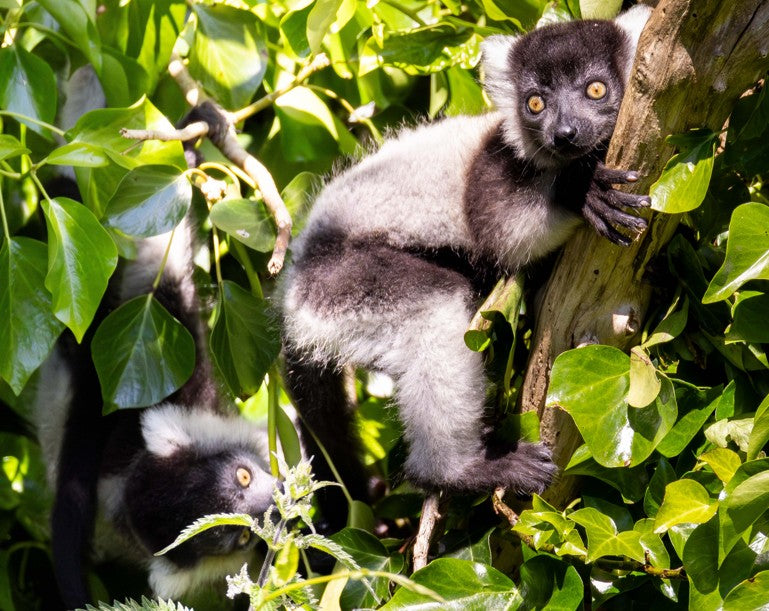
Fota Wildlife Park has announced the birth of two critically endangered black-and-white ruffed lemur (Varecia variegata) babies, born on 21st April to first-time mother Romy and father Iray, following a gestation period of 102 days.

Like all lemur species, the black-and-white ruffed lemur is native to the island of Madagascar and is now considered one of the most threatened primates on earth. Of the 81 known lemur species, 79 are listed by the IUCN as being in danger of extinction, with fewer than 250 black-and-white ruffed lemurs estimated to remain in the wild today.

Teresa Power, Lead Ranger, said: "We were very hopeful that Romy was about to give birth when we observed her nest-building on her island habitat in April. Later that month, she spent considerable time near a particular area, confirming she had given birth. The animal care team were absolutely thrilled when we spotted Romy moving the two babies around the island. As yet we do not know their genders, as they are still very young — but we are now calling on the public to help name them.

The two little ones are thriving and already venturing into the tunnel that connects their house to their island habitat, where they can be spotted sunbathing there with their parents.
As a conservation charity, Fota Wildlife Park sees this birth as an important opportunity to raise awareness about the threats facing biodiversity in Madagascar, an island that has lost 90% of its forest cover in the last 200 years, placing much of its animal and plant life in danger of extinction."
Romy was born at Fota Wildlife Park in June 2022. Father Iray, aged three, arrived from NaturZoo Rheine in Germany in March 2025 as part of a coordinated international breeding programme. Their pairing is a carefully managed match designed to support the genetic health of the species.
Ruffed lemurs display unusually primitive primate behaviour: they build nests and give birth within them. The young are born almost naked and, unlike other primates, are unable to cling to their mother. Instead, Romy has been observed carrying her babies in her mouth when moving them between nests, a completely natural behaviour for this species.
Despite this slow start, ruffed lemur young reach maturity more quickly than other lemur species.
Black-and-white ruffed lemurs play a vital role in their native ecosystems as both seed dispersers and pollinators. They are also the world’s largest pollinator: when feeding on nectar, the lemur’s long nose becomes coated with pollen, which is then transported to other flowers, making them a critical pollinator of the traveller’s palm (Ravenala madagascariensis) tree in Madagascar.
Madagascar is a unique biodiversity hotspot, with over 90% of all its flora and fauna found nowhere else on earth. However, it faces severe threats from deforestation, hunting, and illegal wildlife trade.
Fota Wildlife Park is inviting the public to help name the young lemurs, for a chance to win one of two Conservation Annual Passes. Name suggestions can be submitted via the link or form below and should either be inspired by the lemurs’ natural home of Madagascar or carry a meaningful connection to the species.
Fota Wildlife Park is open daily from 9.30 am. See www.fotawildlife.ie.
June Bank Holiday Weekend at Fota Wildlife Park
Face Painting will take place from 12:00 noon to 13:45 on Saturday 30th and Sunday 31st May, on the patio at the back of the Education, Conservation and Research Centre, face painting is included with entry/admission. Suitable for over 3 years.
Daily Feeding Times Don't miss our daily scheduled feeding times – see here for the full timetable.
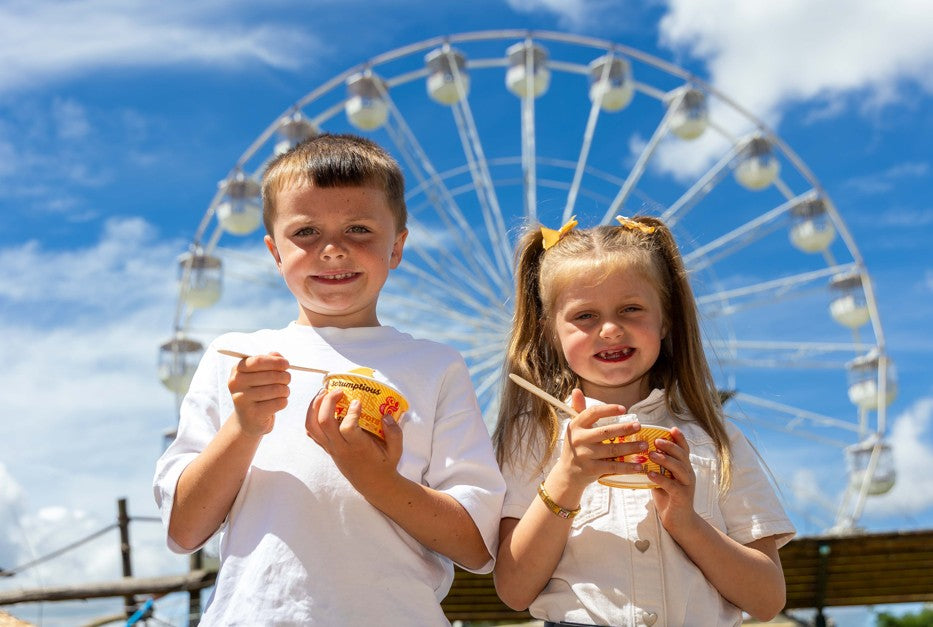
The Panoramic Wheel The spectacular 35-metre-high Panoramic Wheel is available as an optional, paid experience within the Park grounds. Open daily.
Create your own user feedback survey
You can also enter name suggestions via the following link: